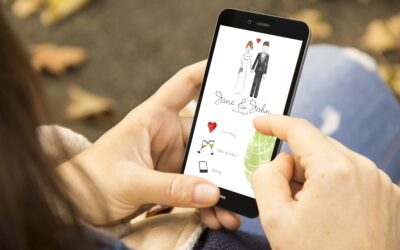
A wedding is much more than a celebration. It is a symbol of connection, identity, and a shared future. Especially with intercultural couples, this connection becomes tangible – on the dance floor at the wedding dance.
When music from two worlds meets, moments full of emotion are created that guests and the bridal couple will carry in their hearts forever. Dancing is a language without words—and precisely for that reason, so powerful.
Each culture brings its own rhythms, movements, and meanings. While in some countries elegant partner dances mark the festive prelude, elsewhere people dance in a large circle – together with family, friends, and multiple generations. The timing of the dance is also culturally shaped: in some traditions, the celebration takes place immediately after the wedding ceremony, while in others, only after the official entrance of the bridal couple.
Precisely this diversity is what makes intercultural wedding dances so unique: they tell your story – authentic, emotional, and full of life.
Two traditions, one wedding dance
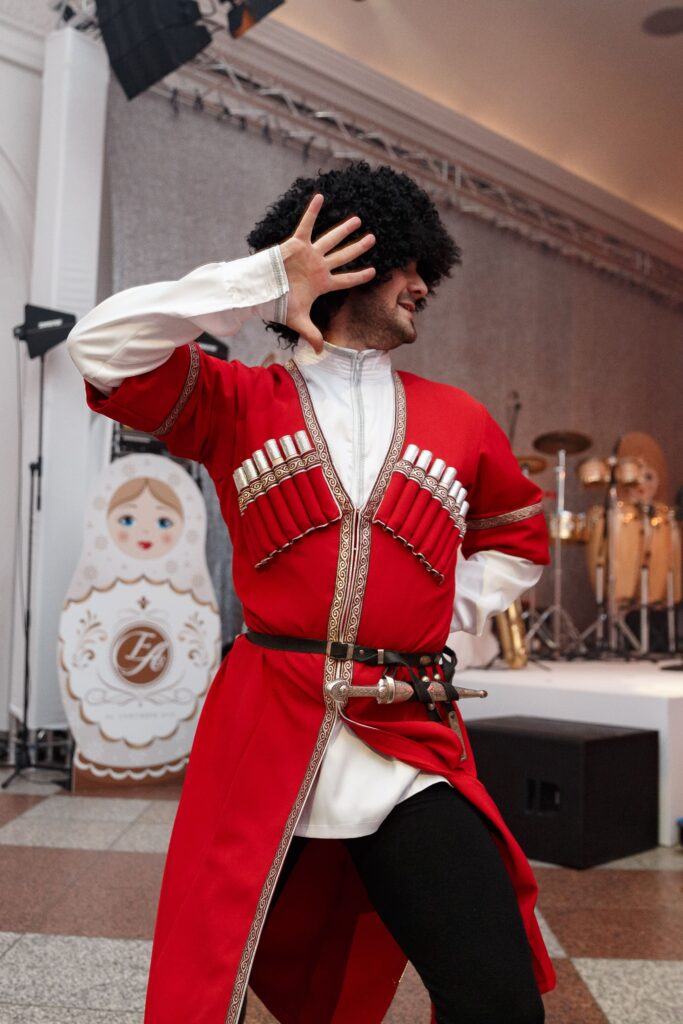
Many intercultural couples consciously choose a first dance that unites both cultures. Often, the evening begins with a very personal song—„their song“—and later opens up to the dances of the respective families of origin. This creates a harmonious transition between intimacy and community.
Especially at weddings with international guests, dancing becomes the emotional center of the evening.
In many European countries, a waltz traditionally opens the celebration. It stands for romance, intimacy, and a festive beginning. It is especially lovely when this classical dance transitions into a modern mix of music—such as a song from the culture of one's partner.
Later in the evening, the Discofox delights almost all generations: uncomplicated, cheerful, and ideal for getting absolutely everyone onto the dance floor.
Hora – Living Joy in the Jewish Wedding Tradition
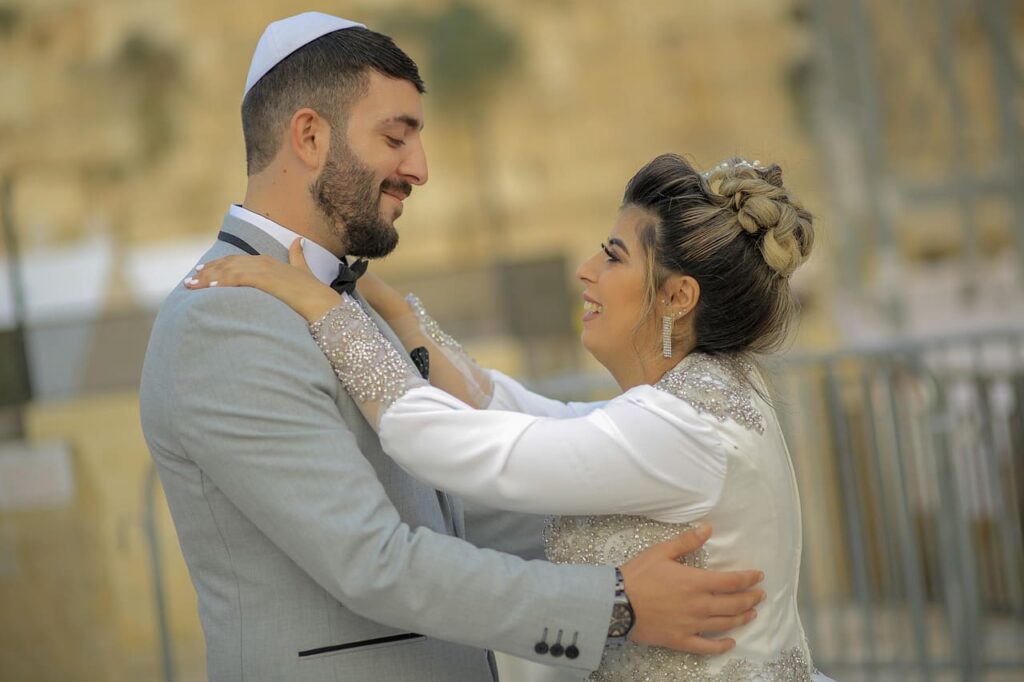
The Hour is one of the most emotional moments Jewish Weddings. This lively circle dance symbolizes community, joy, and the collective celebration of love. Traditionally, the bride and groom are lifted high on chairs—a powerful sign that the couple is supported by their community.
The Hora is usually danced to cheerful klezmer music and gets the entire room moving within a few minutes. For intercultural weddings, it is a wonderful example of how tradition can be celebrated in an open, captivating, and unifying way.

Mediterranean, oriental, powerful – dances with soul
Greek Wedding dances are heavily communal. At Sirtaki everything begins quietly and with dignity before the tempo steadily increases—until in the end the whole room is often dancing along. The Kalamatianos, a traditional circle dance, represents unity and the joy of life—values that fit a wedding perfectly.
In the Turkey does it ensure Halay for true goosebumps moments: guests hold hands or shoulders and move to the same rhythm – a powerful symbol of connection. The Zeybek, often danced solo, brings a proud, calm, and very emotional energy to the dance floor.
In Lebanon and in Syria, the Dabke indispensable. This powerful line dance connects generations and impressively demonstrates that dancing here is not just entertainment, but a deeply rooted tradition.
Latin American wedding dances – pure joy of life
Latin American weddings are known for their warmth, passion, and rhythmic diversity. In many countries, the dance floor comes alive early: Salsa, Bachata or Merengue invite spontaneous dancing and create an open, cheerful atmosphere.
In Brazil, samba brings pure energy, while in Colombia or Cuba, music and dance are inextricably linked to family celebrations. These dances represent the joy of living, closeness, and experiencing the moment together—perfect for intercultural weddings with an international audience.
Oman & the Arabian Peninsula – Elegance, Dignity and Community
In Oman and other regions of the Arabian Peninsula, wedding dances have a deeply symbolic meaning. Traditional dances like the Al-Razha or Al-Ayyala (depending on the region) are often danced in groups and represent solidarity, pride, and cultural identity. Rhythmic drums, singing, and synchronized movements create a dignified, almost meditative atmosphere.
At intercultural weddings, these dances can be wonderfully integrated into the celebration – whether as a special part of the program or as a bridge between tradition and a modern wedding concept.
Indian, African & global – dancing as a community experience
Indian wedding dances are colorful, expressive, and often lovingly choreographed. Bollywood dances tell small stories of love and family, while the energetic Bhangra brings the house down. Here, not only the bride and groom dance, but also friends, siblings, and parents – a true celebration of community.
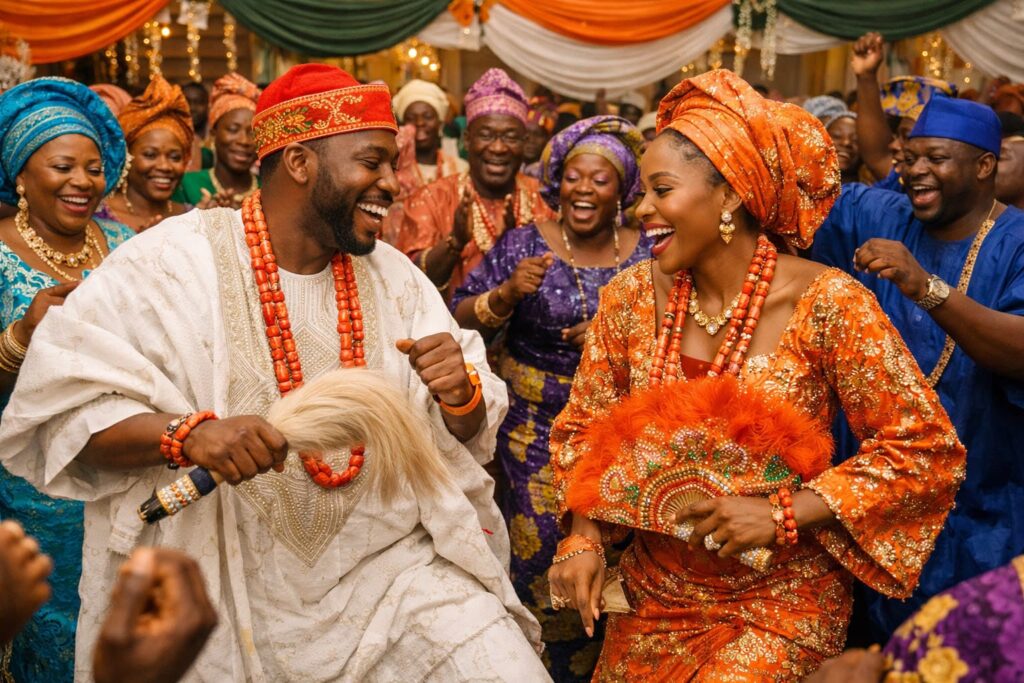
African wedding dances combine power, elegance, and meaning. The Nigerian Yoruba-Tanz radiates dignity and pride, while modern styles like Shaku Shaku or Afrobeats especially inspire younger guests and combine tradition with contemporary pop culture.
Bringing wedding guests along – Dancing connects
Not all guests know the dances from each other's cultures – and therein lies the magic. A brief moment where simple steps are explained builds bridges. Suddenly, people are dancing together who may have only briefly crossed paths before. This is precisely where what we love so much as intercultural wedding planners in Berlin is created: genuine connection.
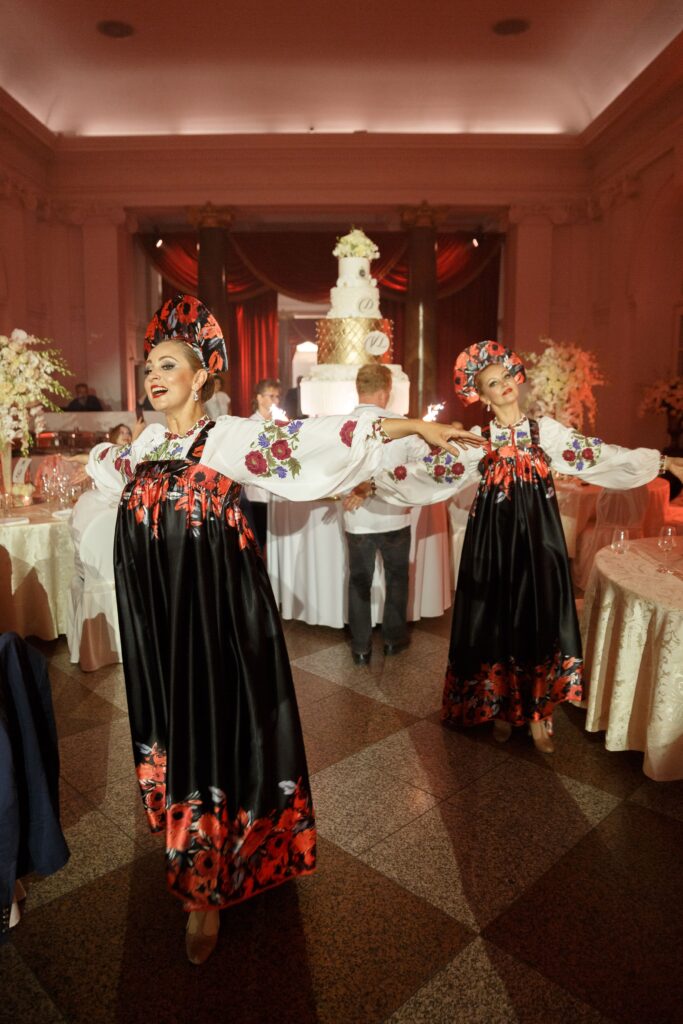
Wedding memories for eternity
The right music is the heart of every wedding. A finely tuned mix of modern love songs and traditional sounds creates an atmosphere in which all generations and cultures find common ground. These special dances do not end on the dance floor – they remain in the heart. They show that love knows no boundaries and that something new and beautiful can emerge from two cultures.
As intercultural Wedding planner from Berlin At Reinweiss Hochzeiten, we’re here to support you with experience, sensitivity, and genuine passion.